
PART ONE: THE WEIGHT OF BLOOD
CHAPTER ONE: THE HOUSE ON THE HILL.
The house on the hill was a monument to everything Ruth Harrison had been taught to despise, even as she had called it home for the first eighteen years of her life. It sat atop the highest ridge in Harrison County, Mississippi, a sprawling white colonial with columned porches and tall windows that caught the morning sun like mirrors and reflected it back into the world as a warning to anyone who dared approach. The grounds were immaculate—rolling lawns of emerald grass that had been trimmed by the hands of men who had never owned a single blade of it, ancient oaks draped in Spanish moss that swayed like ghostly curtains in the summer breeze, gardens that bloomed with azaleas and camellias and roses in their proper seasons, each flower planted precisely where it belonged, each petal a testament to the order that the Harrison family had imposed upon the world around them.
It was the kind of house that appeared on postcards, the kind of house that people pointed to with pride when they spoke of the old families, the ones who had built this part of the South with their own hands and their own money and their own unshakeable belief in their own superiority. It was the kind of house that whispered secrets, that held memories, that bore witness to the rise and fall of generations. And it was the kind of house that Ruth had fled in the dead of night, never to return.
She had grown up in that house, had run through its halls as a child, her bare feet slapping against the polished hardwood floors, her laughter echoing off the high ceilings. She had sat at the long mahogany dining table, learning which fork to use for which course, learning how to speak to the help, learning how to be a proper Southern lady. She had attended the finest schools, worn the finest clothes, and been promised a future that would be just as fine as her past.
But all of that had ended the day she told her father she was pregnant.
The memory of that day was burned into her mind like a brand, a moment of such searing pain that she had never been able to fully escape it. She had stood in her father s study, her hands clasped together to keep them from trembling, her eyes fixed on the Persian rug beneath her feet, the intricate patterns blurring as tears filled her eyes. Her father, William Harrison III, had sat behind his massive oak desk, his face a mask of cold fury, his eyes hard as flint, his jaw set in the rigid line that she had learned to fear as a child. His mother, Eleanor, had stood by the window, her back turned, her shoulders rigid with disapproval, her silhouette a perfect portrait of aristocratic disdain.
"You ve disgraced this family," her father had said, his voice low and dangerous, each word cutting into her like a blade. "You ve thrown away everything we ve given you. Everything we ve worked for. For what? For some... some nobody from the other side of the tracks?"
Ruth had wanted to defend herself, to explain that the man she loved was not a nobody, that he was kind and gentle and had promised to marry her, that he had a soul as deep and true as any man her father had ever met. But the words had died in her throat. She had seen the look in her father s eyes, and she had known that nothing she could say would make a difference. She had known that he had already judged her, already condemned her, already erased her from the family tree.
"Who is he?" her mother had asked, finally turning from the window. Her voice was cold, dismissive, the voice of a woman who had long ago stopped believing that her daughter was capable of anything worthwhile. "Who is the father of this child?"
Ruth had shaken her head. "I can t tell you."
"Can t, or won t?" her father had demanded, his voice rising, his face flushing with anger.
"Both," she had whispered.
The truth was that she had promised to protect him. He was a good man, a decent man, but he was also a man with secrets, a man who had trusted her with those secrets and asked her to keep them safe. She had loved him, and she had kept her promise. She had loved him the way she had never loved anyone before, with a fierceness that frightened her, a devotion that defied all reason. And she had believed, with all her heart, that he would come back for her, that he would find a way to be with her, that their love would conquer everything.
But her father had not been moved by love. He had been moved by rage, by pride, by the cold calculation of a man who had built his life on appearances and was not about to let his daughter destroy it all.
Her father had given her an ultimatum. Either she would name the father, or she would leave the house and never return. She had refused, and he had made good on his threat. Within hours, she had been packed and turned out, her belongings thrown into a single suitcase, her future erased as if it had never existed.
She had stood on the steps of the house that had been her home, clutching her suitcase, watching the door close behind her. She had heard the click of the lock, the finality of it, and she had known that she was truly alone. Her mother had not come to say goodbye. Her father had not looked back. She had been cast out like a stranger, a stranger who had once been their daughter.
The years that followed had been hard, harder than she could have ever imagined. Ruth had found work where she could, cleaning houses and waiting tables and doing whatever was necessary to survive. She had moved from town to town, always one step ahead of the shame that seemed to follow her like a shadow, always looking over her shoulder, always waiting for the other shoe to drop.
She had given birth to her son, William, in a small hospital in a town she barely remembered, a place called Hattiesburg, where the nurses had been kind and the doctors had been indifferent. She had held him in her arms, this tiny creature with his pale hair and his winter blue eyes, and she had promised herself that she would give him a better life than she had had. She had promised herself that he would never know the pain of rejection, the sting of shame, the cold emptiness of being cast out by those who were supposed to love him.
She had named him William after her father, not because she loved her father—she didn t, not anymore—but because she wanted her son to have a name that meant something, a name that carried weight, a name that would open doors rather than close them. She had hoped, naively, that the name would protect him, that it would give him a chance at the life she had never been able to have.
But promises, she had learned, were easier made than kept.
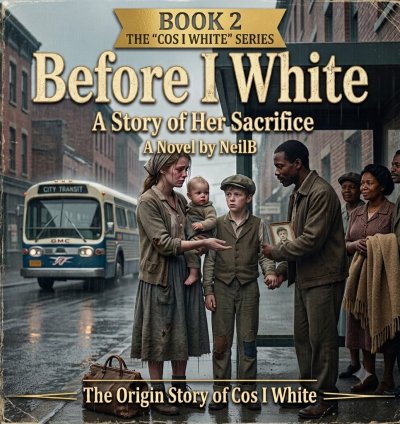
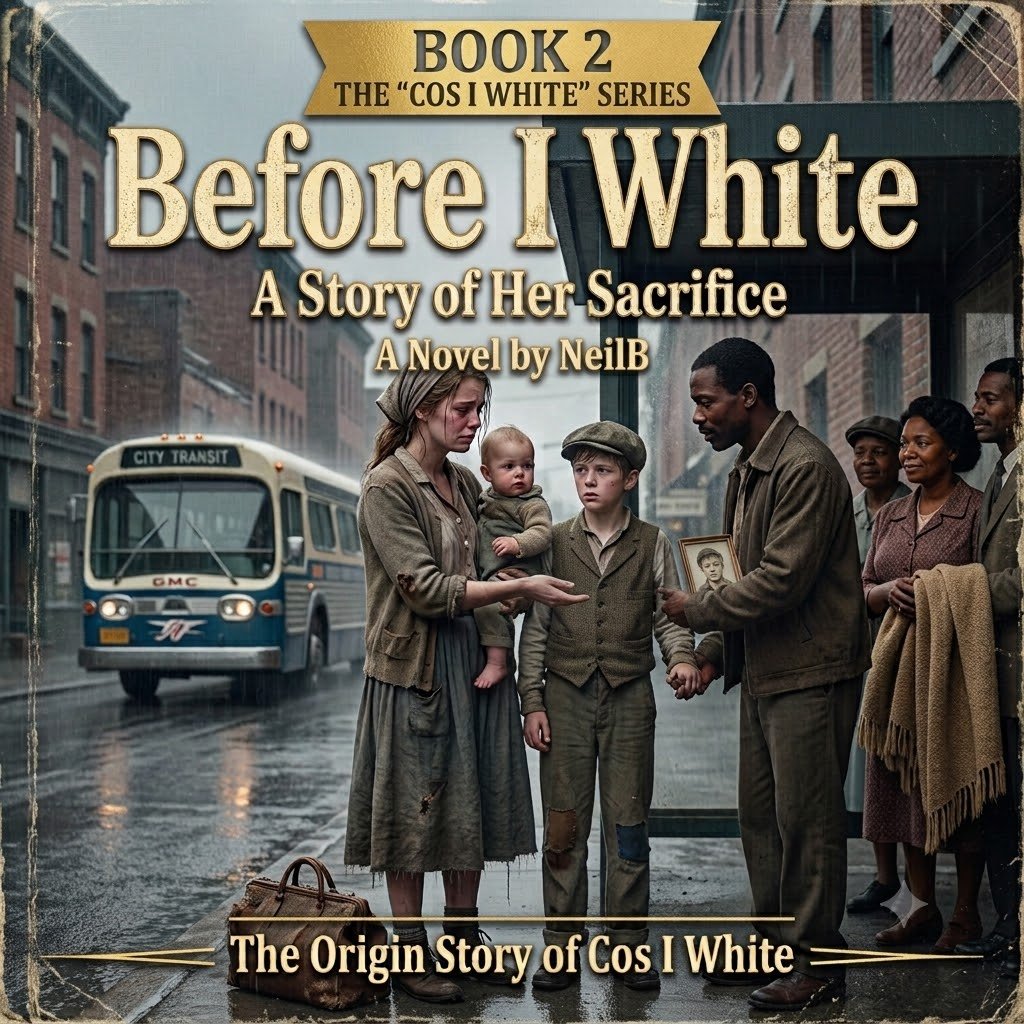
Now, eight years later, she stood at the edge of a different town, a small place called Willow Creek, holding her son s hand and wondering if she was about to make the biggest mistake of her life. The Greyhound bus that had brought them here had long since disappeared, its diesel fumes dissipating into the cold winter air, its rattle and hum fading into the distance. The sun was beginning its slow descent toward the horizon, painting the sky in shades of orange and gold, casting long shadows across the frozen ground.
"Where are we going, Mama?" William asked, his voice small and tired, his small hand clutching hers so tightly that his knuckles were white.
Ruth looked down at her son, at his pale hair and his winter blue eyes, at the face that was so much like his father s. She felt a surge of love so powerful it almost brought her to her knees, a love that was fierce and protective and all consuming. This boy was her whole world, her reason for living, her only source of hope in a world that had given her nothing but pain.
"Just a little further, baby," she said, squeezing his hand. "Just a little further."
No reviews found!








No comments found for this product. Be the first to comment!